
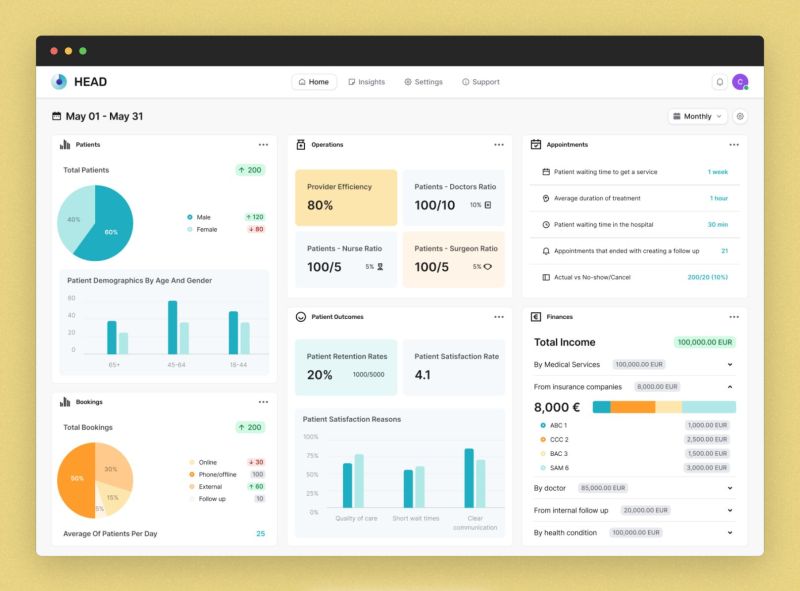
Running a hospital should be more than just about medical care – it’s about organization, efficiency, and data-driven decisions. Yet, most hospital execs still make key decisions based on old reports or disconnected systems.
It’s time for a change. That’s where AI-powered healthcare executive dashboards come in.
Here’s how they can completely transform the way hospitals run:
1. Get real-time insights – No more waiting for reports
You don’t need to wait for weekly reports or play catch-up with outdated data. With AI dashboards, you get real-time insights into everything from patient flow to staff performance.
No more scrambling when ER wait times spike or ICU beds start filling up. You’ll know immediately and be able to take action.
2. Proactive executive management notifications
Proactive management is key to staying ahead in healthcare. AI dashboards don’t just present data – they detect trends and send real-time notifications to management when something important is happening.
E.g.: If the system detects increasing wait times or rising patient acuity levels, it will notify executives and recommend actionable steps to avoid a crisis. This enables leaders to act before small issues become major problems.
3. Predict and optimize resources
Hospitals are often reactive when it comes to staffing or resource allocation. Predictive AI can forecast demand and optimize resources in advance, ensuring the right number of staff and necessary equipment are always in place.
E.g.: AI dashboards can predict peak hours for patient visits and automatically adjust staff schedules, saving time and money.
4. Streamline finances, control costs
Too many hospitals bleed money due to inefficient budgeting and uncontrolled expenses. AI dashboards track financial health in real-time – giving executives the clarity they need to identify cost overruns and adjust strategies on the fly.
The result? Better control over expenses and smarter spending.
5. Make smarter decisions with data, not gut feelings
Decision-making based on instincts or gut feelings is no longer enough. AI dashboards pull data from all areas of the hospital and present you with actionable insights – allowing you to make informed decisions every time.
From patient satisfaction to staff workload – you get the full picture, in real time.
Automated real-time reporting = more time for patient care and fewer compliance issues.
Bottom line – AI healthcare dashboards aren’t just nice-to-haves – they’re game changers. They give hospital leaders the tools to make smarter, faster decisions, optimize resources, and improve patient care.
How are you using AI to run your hospital better? Let’s talk about it.