
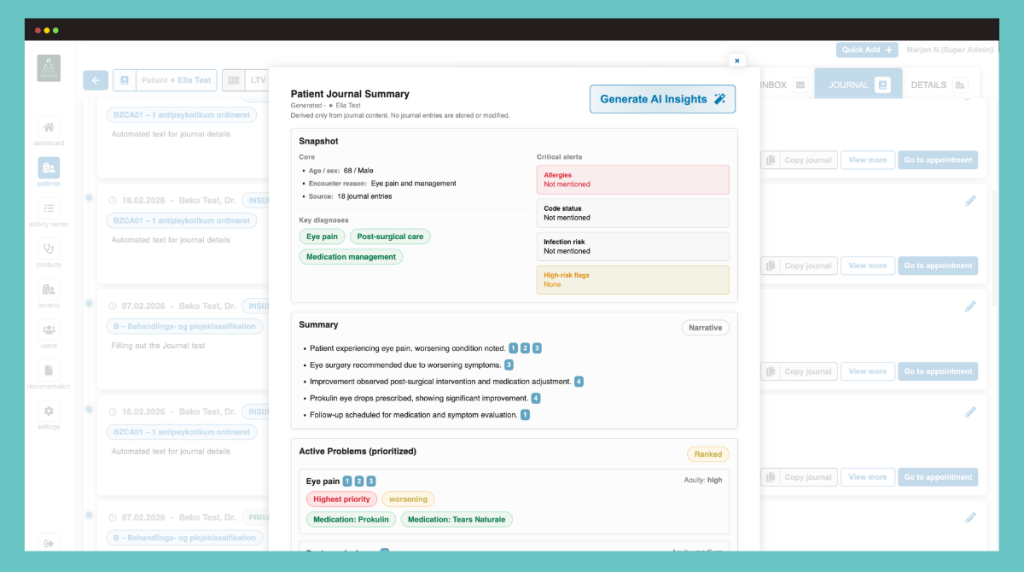
AI is the new front desk, back office, and second brain for your clinic
Picture a familiar scene. A patient who’s been coming to the clinic for years walks in for a follow-up. The doctor opens the file and immediately faces a small mountain of history: past visits, old notes, lab results, things mentioned once and never followed up on. Before any real conversation about today’s visit can start, several minutes disappear into simply remembering who this person is and what’s already been tried.
That moment, repeated dozens of times a day across a clinic, is where a lot of quiet, invisible time gets lost. It’s also exactly where AI has started to make a real difference inside digital healthcare platforms.
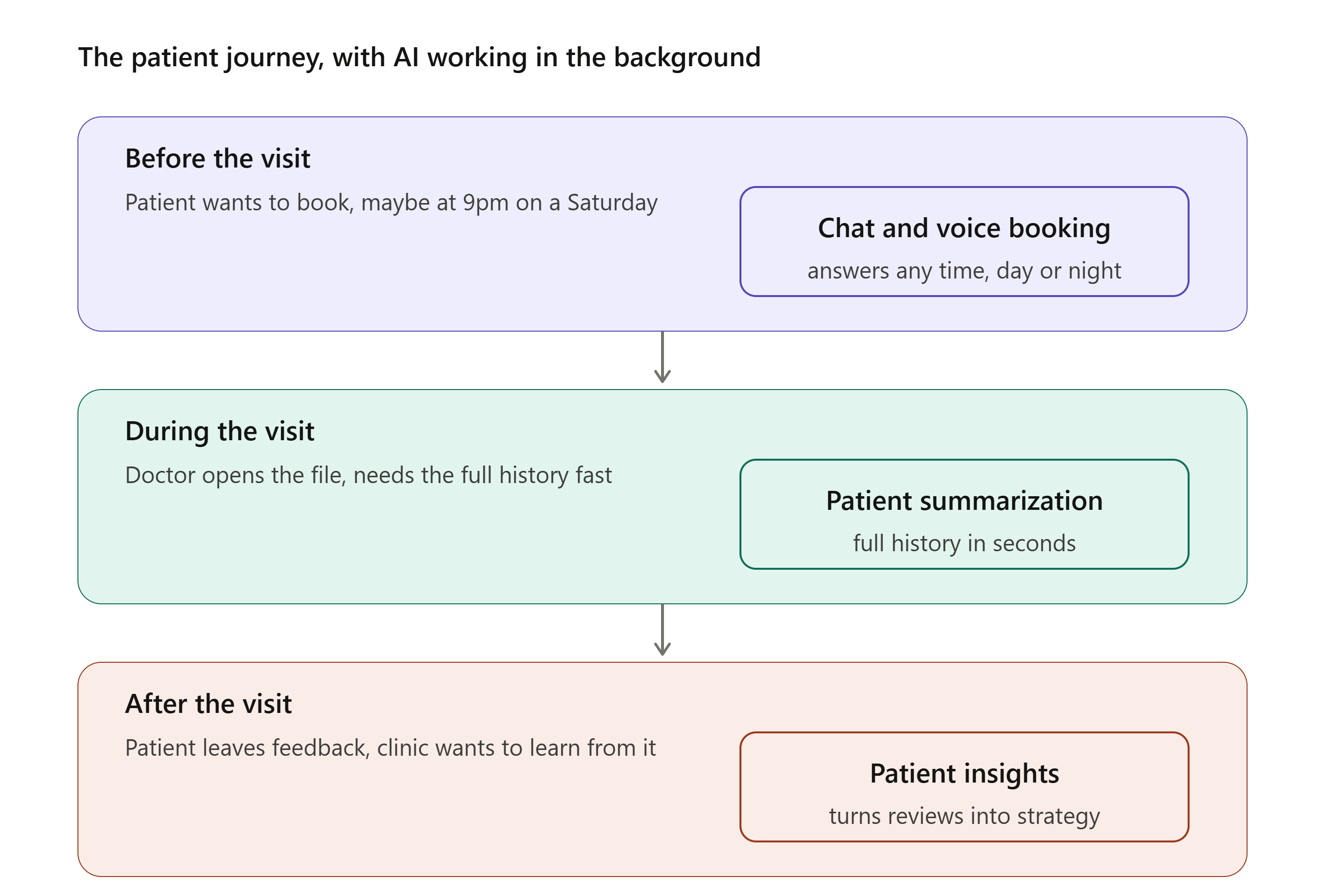
The diagram above shows roughly how this plays out across a typical patient’s experience, from booking an appointment to the conversation afterward. Let’s walk through each part.
Booking shouldn’t depend on office hours
Most people don’t decide they need an appointment at a convenient time. It happens on a Tuesday night, half-asleep, or a Sunday morning when something’s been nagging at them. If the only way to act on that is calling during business hours, that intention often just fades.
With AI-driven chat and voice, a patient can ask questions and start booking right then, at any hour, and get a real, immediate response instead of a voicemail. To the patient, it doesn’t feel automated. It just feels like the clinic is always there when they need it.
The part that actually gives doctors their time back
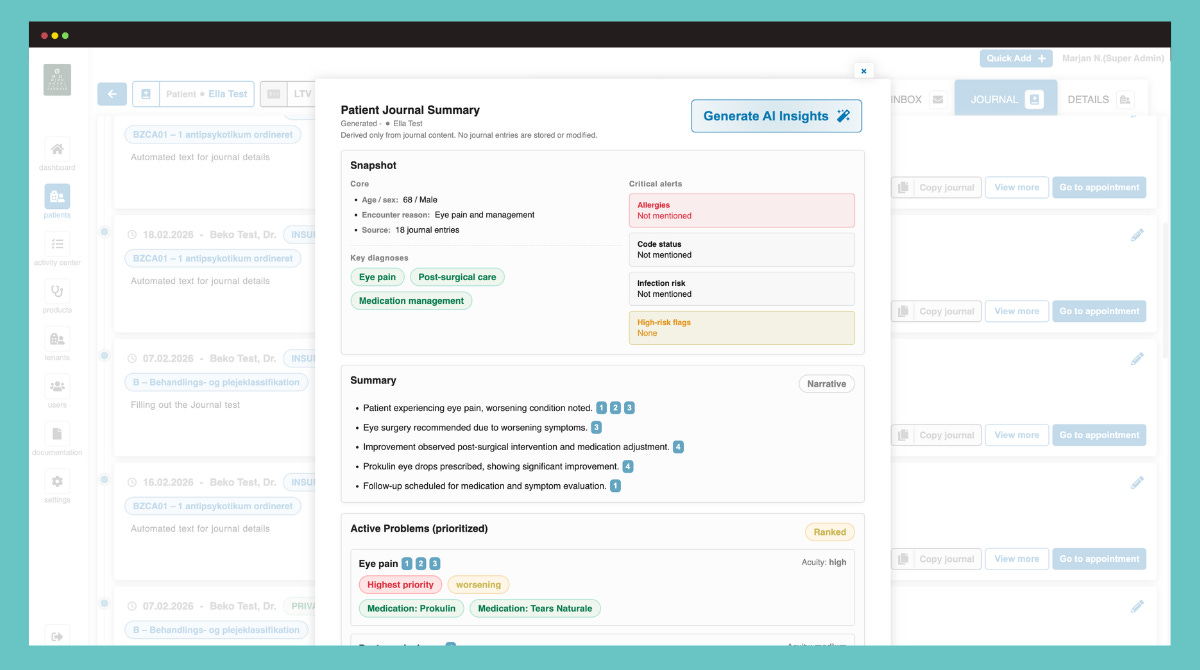
This is the piece that matters most day to day. When a doctor opens a returning patient’s file, they shouldn’t have to dig through years of scattered notes just to reconstruct the story. AI can do that instantly, pulling together prior visits, treatments, results, and the details that actually matter into one clear summary the moment the file opens.
It’s easier to see what that means in practice:
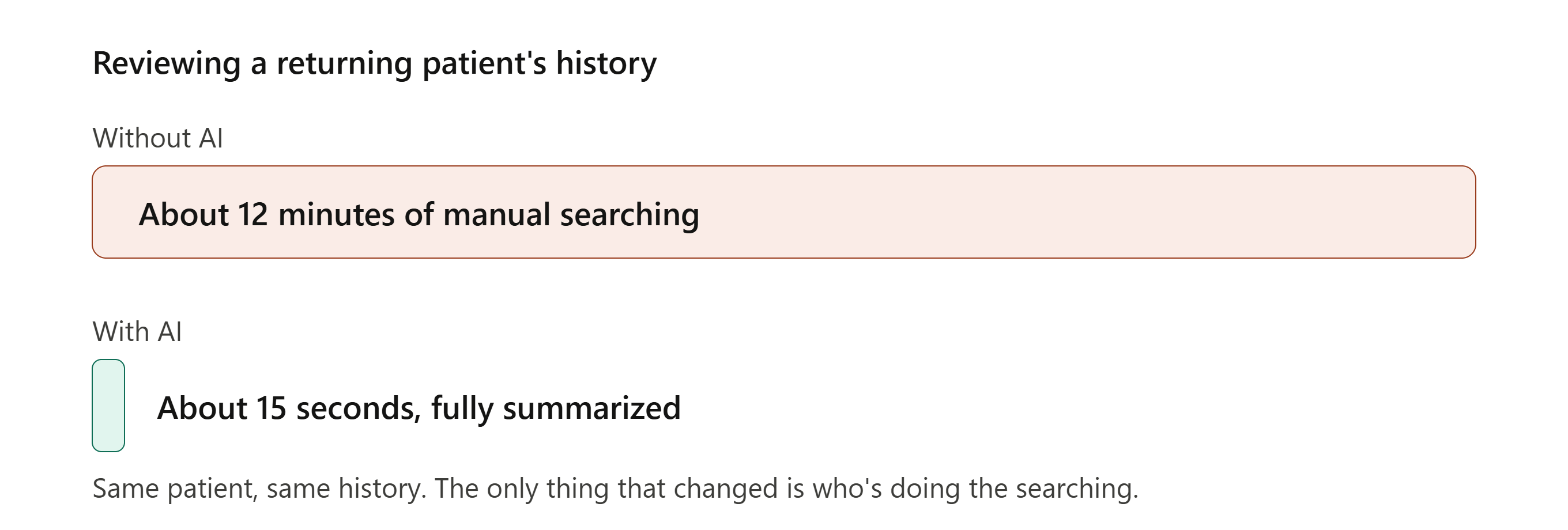
Twelve minutes versus fifteen seconds, sounds small until you multiply it across a full day of appointments. It’s the difference between a doctor constantly playing catch-up and one who walks into every room already prepared, with real attention left over for the conversation that matters.
Listening to what patients are already telling you
Patients leave feedback all the time, in reviews, comments, casual chat exchanges, but almost nobody has the time to sit down and actually read through all of it, let alone notice the patterns hiding inside. This is where AI quietly does some of its most useful work, sorting through that noise and surfacing what’s actually there.
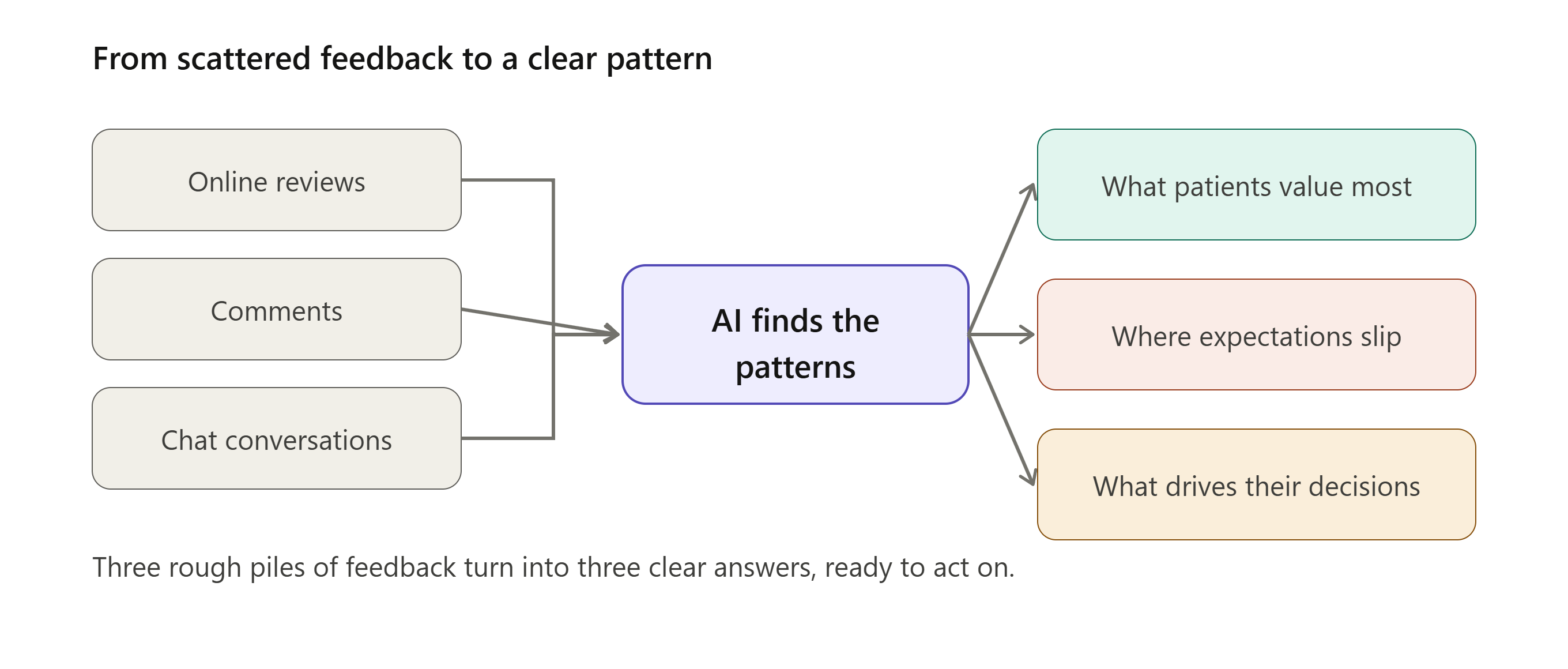
The breakdown above shows the basic shape of it. Scattered comments and reviews go in, and what comes out are three plain, useful answers: what patients value most, where their expectations are quietly not being met, and what tends to actually influence whether someone books, returns, or tells a friend.
For clinical managers, that’s an ongoing read on service quality without the manual effort of compiling it. And for marketing, it’s something even better: real patient sentiment, the honest kind, that can be used on the website or in a campaign without it feeling like a generic claim, because it isn’t one.
Why this all matters together
None of this is about replacing the human side of healthcare. It’s about clearing away the parts of the job that were never really about care to begin with, the searching, the waiting, the manual reading between the lines. When AI handles that quietly in the background, doctors get more real time with patients, clinical managers get a clearer picture of how the clinic is actually doing, and patients get a calmer, more responsive experience at every step along the way.
That’s the role AI plays on platforms like PEX, not as a flashy feature people talk about, but as a steady layer of support working underneath everything else, so the people doing the caring can spend their time actually caring.
If your hospital or clinic is looking to modernize how you manage patient relationships, with AI doing the heavy lifting on summarization, round-the-clock booking, and turning feedback into real insight, this is exactly what a modern patient experience and growth platform like PEX is built for.